
A paycheck can look like enough on payday and feel gone a week later. Often, the missing piece is a plan for what that money needs to cover before the next deposit arrives.
A budget helps you see those commitments in one place. It will not fix every money problem, but it can show you what needs to change. You do not need a perfect spreadsheet to begin. You need honest numbers and a few minutes each week.
1. Start with the money you actually receive
Use your take-home pay: the amount deposited after taxes and payroll deductions. If health insurance or retirement contributions already come out of your paycheck, do not subtract them a second time from that deposit.
List your pay dates as well as the amounts. If your income varies, build your essential spending around a conservative estimate based on your recent income. Treat extra income as money to assign when it arrives, rather than money you have already spent.
2. Put bills and due dates in front of you
Write down housing, utilities, transportation, insurance, debt minimums, groceries, and other recurring commitments. Check bank and card statements so your plan reflects what you actually spend, including subscriptions and small purchases.
Then ask: What must this paycheck cover before I get paid again? A monthly total can look manageable even when several bills land in the same week. A separate list of due dates helps you spot that timing problem.
3. Give the next paycheck a clear assignment
Cover essential expenses and required payments first. Then decide what you can put toward savings, additional debt payments, and flexible spending. There is no single percentage split that works for every household.
Here is one hypothetical way someone might assign a $2,000 paycheck. These are example amounts, not a recommended allocation:
| Purpose | Amount |
|---|---|
| Set aside for bills | $900 |
| Groceries and transportation | $300 |
| Debt payments | $200 |
| Savings | $200 |
| Irregular expenses | $100 |
| Other spending | $300 |
| Total assigned | $2,000 |
Your amounts should reflect your own bills and priorities. If the total is higher than your paycheck, adjust the plan before treating anything as available spending money.
4. Plan for expenses that do not happen every month
Car registration, annual memberships, holidays, and other occasional costs still belong in your budget. For a known $600 expense due in six months, setting aside $100 a month would cover it, assuming you have not already saved toward it.
Keep those planned costs separate from emergency savings. An emergency fund is for unexpected expenses or an income interruption. Start with an amount you can sustain; even small contributions can help build a buffer.
5. Use the free template to compare your plan with reality
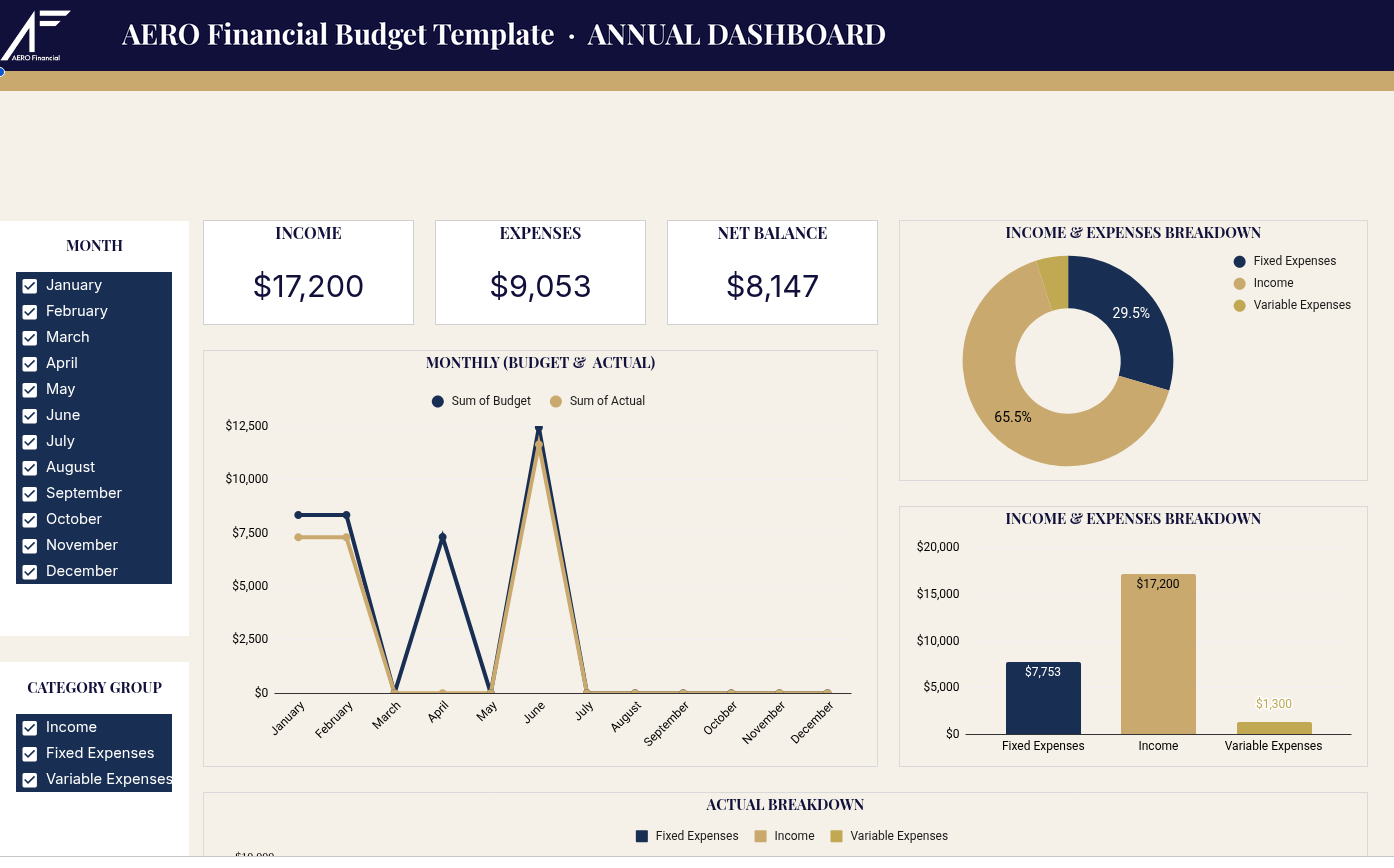
The AERO Financial budget template includes monthly worksheets and an annual dashboard. Use your own copy, replace the example figures with your income and expenses, and compare what you planned with what actually happened.
- Start with the current month instead of trying to reconstruct an entire year.
- Enter the income and spending you expect.
- Update actual spending as transactions happen.
- Review the dashboard to see how your monthly numbers add up.
Keep account passwords, Social Security numbers, and other sensitive identifiers out of your budget worksheet. You only need amounts and categories to make the plan useful.
6. Review it for 10 minutes each week
Choose a regular day to check your balances, upcoming bills, and remaining spending money. If one category runs over, decide where the money will come from. Update your plan when income or expenses change.
If essential expenses consistently exceed income, the spreadsheet has identified a gap. Look for expenses you can reduce, ways to increase income, or payment arrangements you can discuss with providers or creditors before a missed payment.
Budgeting is the beginning of the bigger picture
Once you understand what your household spends, you can ask a second question: how would those bills get paid if your income stopped? Our family income article and calculator can help you explore that scenario using your own estimates.
Put your next paycheck on a plan.
Get the free AERO Financial budget template and start with one month.
Download budget templateThe download form asks for your name and email. Phone is optional.
Sources and further reading
For educational purposes. Examples are hypothetical and do not represent a personalized financial recommendation.